How to Even Out Uneven Teak Wood Color for Long-Lasting Exterior Finishing
ptmakitachemindoindonesia.com – Many teak finishing applicators face complaints due to uneven color, inconsistent appearance, and noticeable color changes after months of outdoor exposure. Although the wood used is the same teak, the root cause is not the applicator, but the wood’s inherent chemical reactions.
Published by:
KYOJIN – Specialist in Water-Based Wood Coating & Treatment Systems
Industrial Wood Coating & Chemical Solutions
Introduction
Teak wood (Tectona grandis) is widely recognized for its durability, natural beauty, and premium appearance. However, one characteristic frequently questioned by customers and finishing operators is the natural color variation or streaking present in teak wood. This document explains, from a technical and chemical perspective, why teak exhibits non-uniform coloration and how this characteristic should be properly understood in industrial wood finishing applications.
Anatomical Structure of Teak Wood
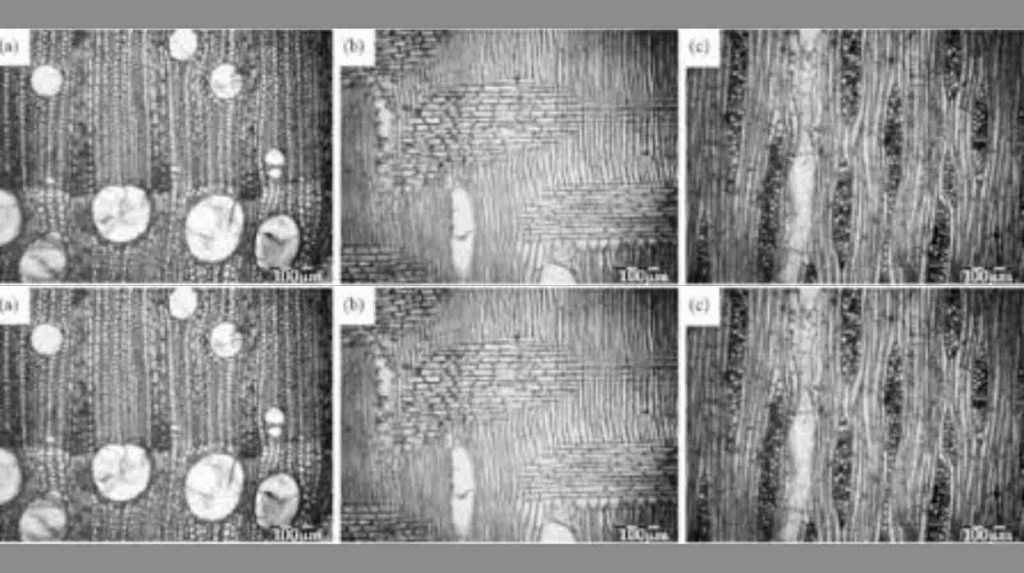
Teak wood is composed of elongated, tubular cells aligned parallel to the grain direction. Each cell consists of multi-layered walls forming a complex composite material. The interaction between anatomical structure and chemical composition influences not only mechanical strength, but also color development, absorption behavior, and finishing performance.
Chemical Composition and Its Role in Color
• Cellulose (40–45%): Provides structural strength and does not contribute to color.
• Hemicellulose (25–30%): Acts as a binding component with minimal influence on color.
• Lignin (25–30%): The primary source of teak’s natural coloration.
• Extractives (5–10%): Including tannins, teak oils, phenolic compounds, and resins that influence hue, depth, and durability.
Conclusion
Color variation and streaking in teak wood are natural results of its anatomical structure and chemical composition. Lignin establishes the basic color framework, while tannins and extractives regulate color depth and long-term stability. These characteristics should be regarded as intrinsic properties that reinforce the authenticity and value of teak wood.
CHEMICAL COLOR EQUALIZATION PROCESS FOR STREAKED TEAK WOOD
(Oxidation – Retannization – Oxygen Protection Method)
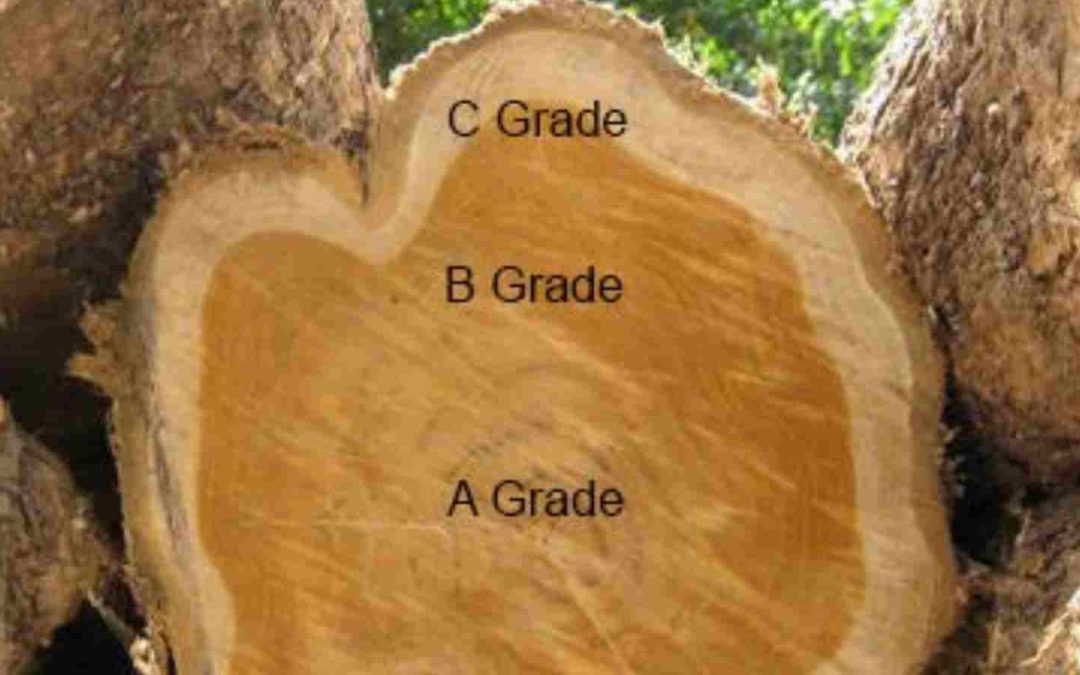
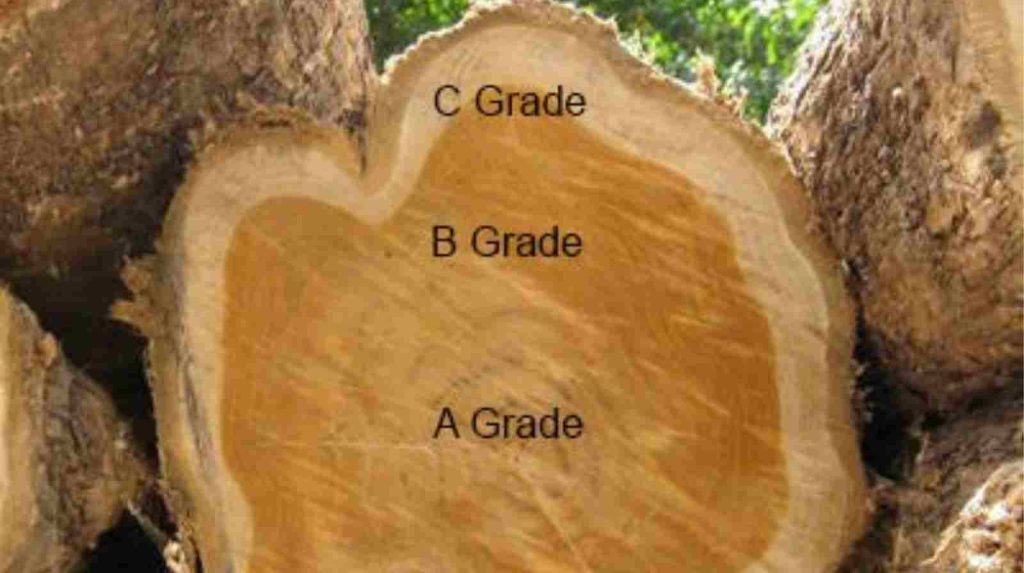
Teak wood exhibits natural color variation due to uneven distribution of lignin, tannins, and extractives between different wood regions (heartwood vs. sapwood, earlywood vs. latewood). The objective of this process is not to eliminate teak’s natural character, but to equalize chemical reactions to achieve a warm, stable, and natural brown tone without the use of synthetic stains.
Fundamental Process Principles
- Controlled oxidation to activate lignin and equalize surface reactivity
- Mild retannization to reconstruct natural brown coloration
- Reaction termination to prevent over-darkening or greying
- Oxygen isolation to ensure long-term color stability
- Surface protection to preserve aesthetics and durability
STEP 1 . OXIDATION (INITIAL COLOR EQUALIZATION)
Product: Kyojin Treatment T-01
Purpose:
• Equalize lignin reactivity
• Reduce natural streak contrast
• Open wood pores and cell walls
Chemical Mechanism:
• Breaks weak lignin–extractive bonds
• Light lignin oxidation produces an initial golden-brown tone
• Sapwood and heartwood become chemically more uniform
General Parameters (non-formulative):
• Clean and oil-free teak surface
• Application: brush or wipe along grain direction
• Contact time: approx. 60 minutes
• Condition: dry wood, free from dust and contaminants
STEP 2 . CONTROLLED RETANNIZATION
Product: Kyojin Retanning Agent T-02
Purpose:
• Restore natural teak brown character
• Replenish tannin-deficient areas
• Equalize tonal differences
Chemical Mechanism:
• Reacts with activated lignin and exposed phenolic groups
• Forms stable warm-brown complexes
STEP 3 . DAMP WIPE & DRYING
Purpose:
• Terminate further chemical reactions
• Remove excess tannin residues
• Stabilize color at its optimal point
Method:
• Wipe surface with clean damp cloth (neutral water)
• Do not soak or wash
• Repeat 1–2 times if necessary
• Allow natural drying; avoid extreme heat
Chemical Principle:
• Removes free ions formed during retannization
• Stops tannin diffusion
STEP 4 . SEALER (OXYGEN ISOLATION)
Product: Kyojin Sealer EXT 12
Purpose:
• Inhibit further lignin oxidation
• Lock in the achieved color
• Act as a chemical and physical barrier
Mechanism:
• Seals micro-pores
• Limits oxygen, moisture, and active compound migration
Ideal Sealer Criteria:
• Water-based, low yellowing
• Neutral to slightly alkaline pH
• Good penetration
• Non-reactive with tannin residues
Note: Without sealer, color will continue to evolve and change.
STEP 5 . WATER-REPELLENT TOP COAT (LOTUS EFFECT)
Product: Kyojin Death Matt <6% Water Repellent
Purpose:
• Long-term surface protection
• Maintain color stability
• Deliver a natural, premium appearance
Lotus Effect Principle:
• High water contact angle
• Water does not spread or carry oxygen and contaminants
• Reduces staining, re-oxidation, and indirect UV degradation
Ideal Top Coat Characteristics:
• Dead matt / low sheen
• High transparency
• Non-yellowing
• Elastic, following wood movement
Technical Conclusion
Chemical color equalization of streaked teak wood is a controlled reaction process, not staining. The natural brown tone is formed through the interaction of activated lignin, controlled tannin reactions, and limited oxidation.
D. Yusak Liem
Kyojin – Waterbased Wood Coating & Treatment System
Industrial Wood Coating • Resin Technology • Technical Finishing Solutions
Technical consultation & material supply: WhatsApp +62 8139-08139-64